The second phase of the 57th CIFF
Guangzhou closed on March 31st, pairing the Office & Commercial Fair
with CIFM/interzum Guangzhou. Together, they spanned the entire chain – from
finished spatial applications to upstream components. This year’s guiding theme
– “Green Foundation, Intelligent Enhancement, Innovation Leadership” – was not
just a tagline. Throughout the halls, sustainability and social responsibility
emerged as the real narrative drivers.
Office environments go net-zero and
age-friendly
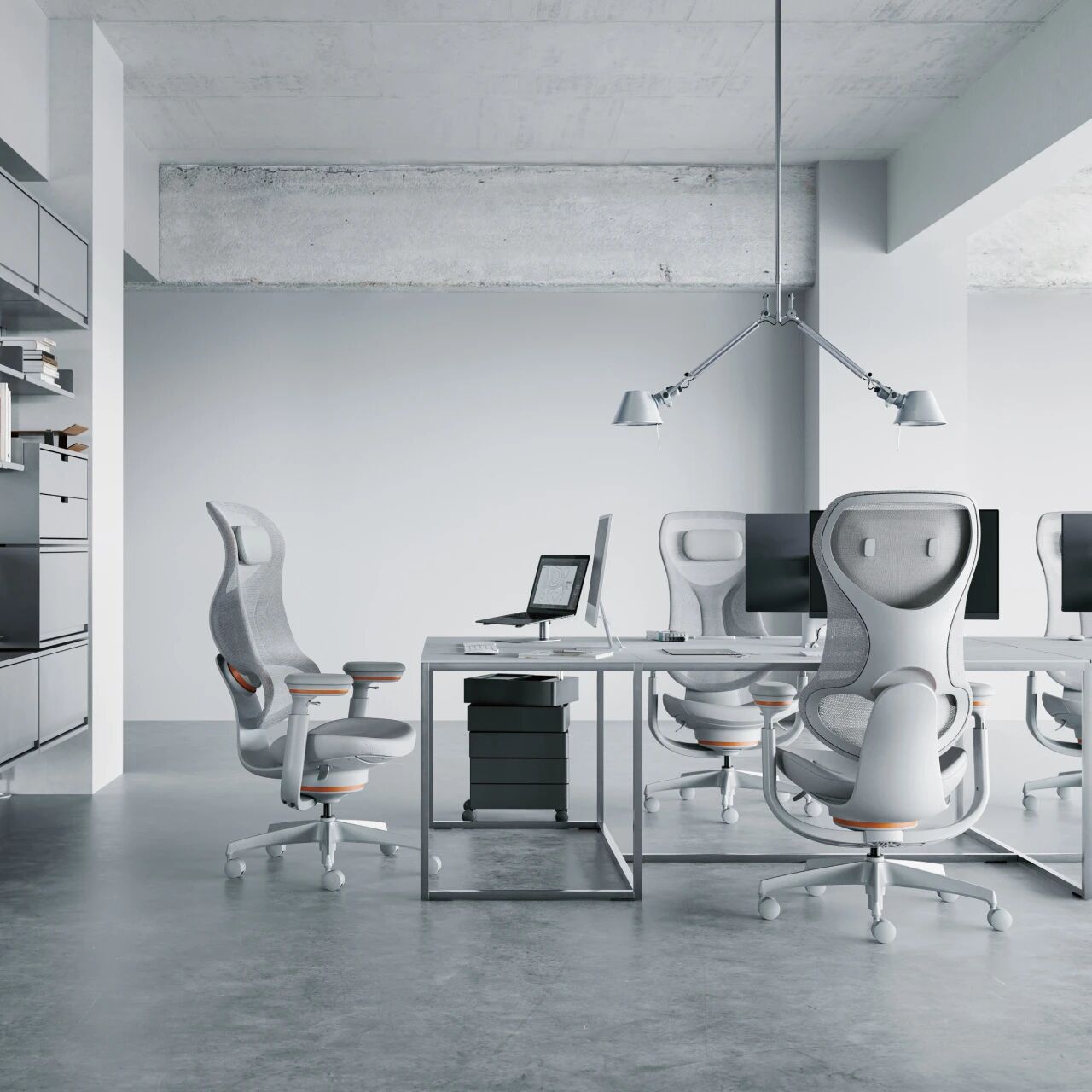
The office zone put net-zero carbon
practices on display, but what stood out was the integration of age-friendly
and wellness concepts into the workplace – a clear nod to global ESG trends.
VICTORY presented a “Wellness Apartment” prototype. Here, rest, activity, and storage were condensed into a single, finely tuned layout. Circulation widths and furniture dimensions were recalibrated for elderly comfort – a small but significant signal that China’s office design is starting to address demographic shifts.
QUAMA offered a full-spectrum workplace scenario – from C-suite offices and collaborative benches to communal lounges and residential-style units. The most talked-about piece was a modular sofa system. Through simple reconfigurations and controlled proportions, it switched between high-performance meeting mode and a looser, lounge-like atmosphere.
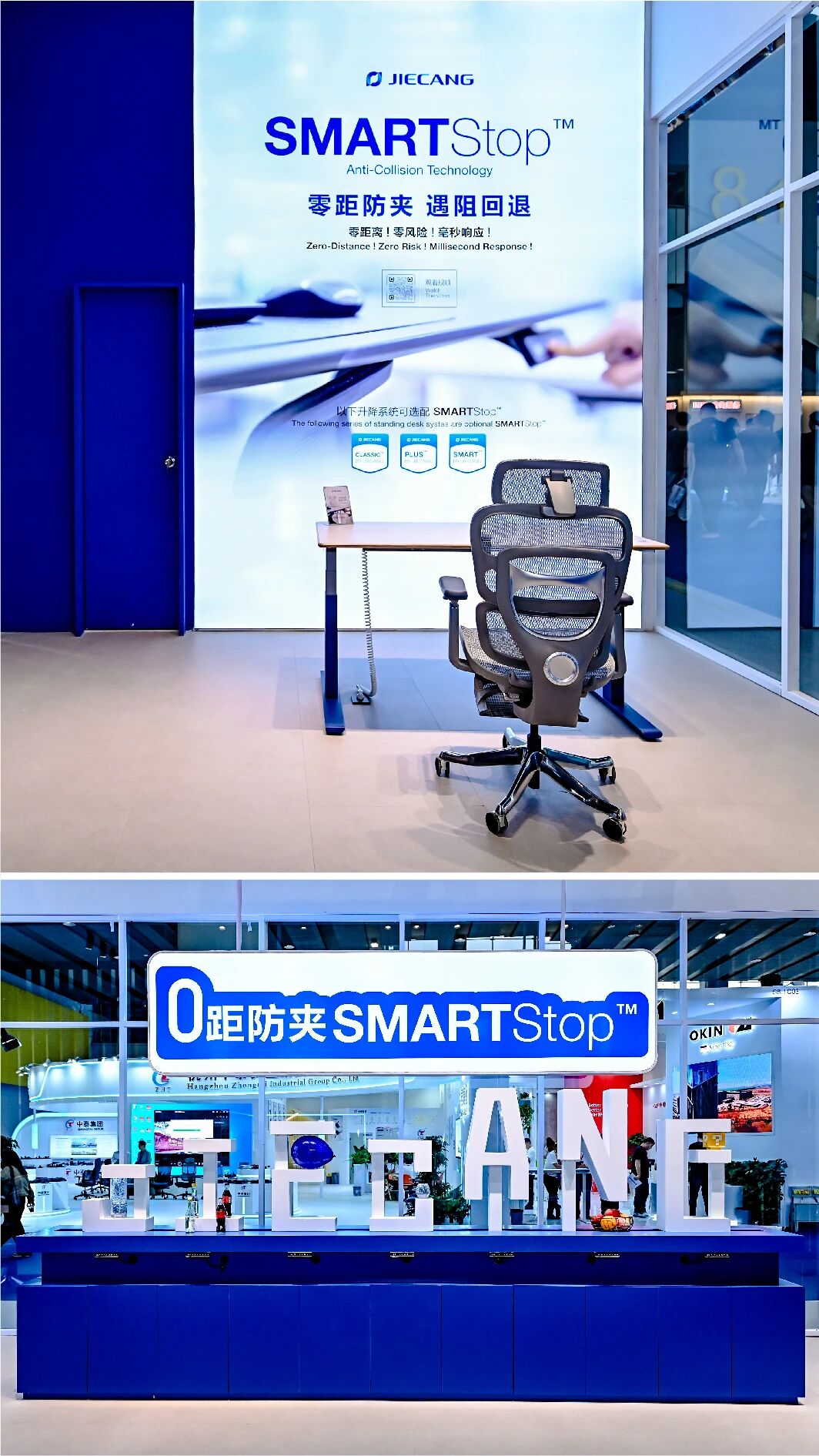
JIECANG’s SMARTStop™ zero-gap anti-pinch
technology drew steady crowds. The system uses high-sensitivity motion
monitoring and refined control logic to detect obstacles at zero distance.
Millisecond response times reduce pinch-risk to near zero – a quiet but serious
upgrade for height-adjustable desks and automated partitions.
Seating: adaptive support redefines workplace health
In the seating section, the conversation centred on ergonomic support and all-day comfort. Self-adaptive technologies, dynamic support mechanisms, and breathable sustainable materials were everywhere.
KOKUYO (Japan) made its CIFF Guangzhou debut with the ingCloud chair. Its 3D Ultra Auto Fit system and three-point omnidirectional sliding mechanism delivered continuous micro-adjustments as the user moved. The large 3D mesh back distributed pressure while maintaining stable support – a hit among visitors who tested it for extended periods.
UE’s “lumbar-support technology” was another crowd-pleaser. A follow-up waist rest and zoned pressure mechanism provided continuous, stable support even as sitters shifted between postures.
MERRYFAIR took a different route with the
Spinelly ergonomic chair. Instead of soft padding, it relied on a spine-like
elastic system that responded organically to posture changes – a structural
approach that felt genuinely fresh.
Public and commercial: modular systems drive low-carbon transformation
The public/commercial zone showed how
modular, quick-install systems can decarbonise schools, healthcare facilities,
and transport hubs.
HUIMEI demonstrated smart school furniture
with real-world scenarios. The Xiqiwen task chair allowed tilt-angle and
headrest adjustments, adapting to different student body types. The Mingde
desk-and-chair set featured curved back and seat surfaces – subtle but
effective for long study hours.
Three thematic exhibitions – green
innovation from multiple angles
Three special exhibitions added critical depth.
“Linking Design Star” functioned as an
industry testbed. Twenty-seven brands and designers worked together, tracing
the journey from collaborative design to commercial application. Crucially, the
exhibition itself used recyclable modular display structures – making green
scenography part of the message rather than an afterthought.
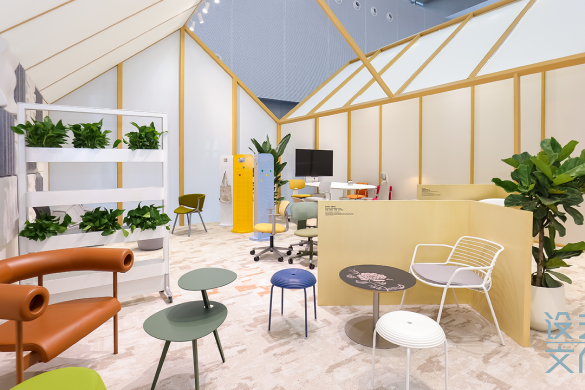
“Design Culture: Art and Artistry” took a
more narrative turn. The Classic Archive juxtaposed Bauhaus steel tubing with
Nordic bentwood, showing how different eras imagined the workplace. The
Structure Lab exposed the mechanical anatomy of comfort – support systems and
dynamic mechanisms laid bare. The Regeneration Institute focused on circular
materials, integrating recycled plastics and regenerative resources into viable
design systems.
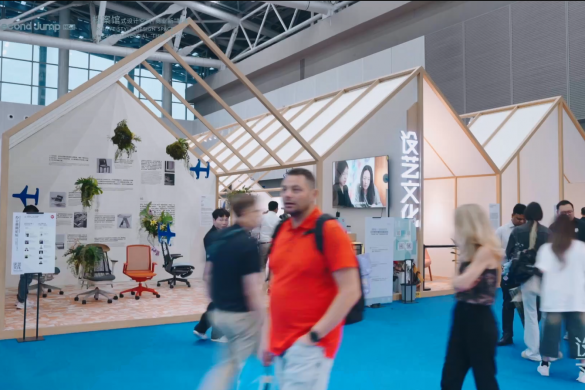
The “Guangzhou
Office Environment Theme Pavilion” – titled “Built・Boundless・Sustainable” –
examined relationships between furniture, systems, and space. A flowing ribbon
structure made from sustainable materials and woven reed craftsmanship ran
through the pavilion, linking five scenes: a Deep Thinking Pod, Collaborative
Cluster, Community Exchange Terrace, Healing Garden, and Design Evolution
Corridor.