Industry leaders at CIFF Guangzhou highlight demand, procurement expectations, and strategies for Chinese furniture suppliers entering the Middle East market
By Construction Week-ITP Media Group

The growing importance of the Middle East
as a target market for global furniture suppliers took centre stage at the 57th
China International Furniture Fair (CIFF) in Guangzhou, where Construction
Week Middle East hosted a panel during Phase 1 of the event.
Titled Why the Middle East Matters: Real Opportunities for Furniture and Design Suppliers, the session brought together voices from design, procurement, and media to unpack the realities of entering and scaling in the region.
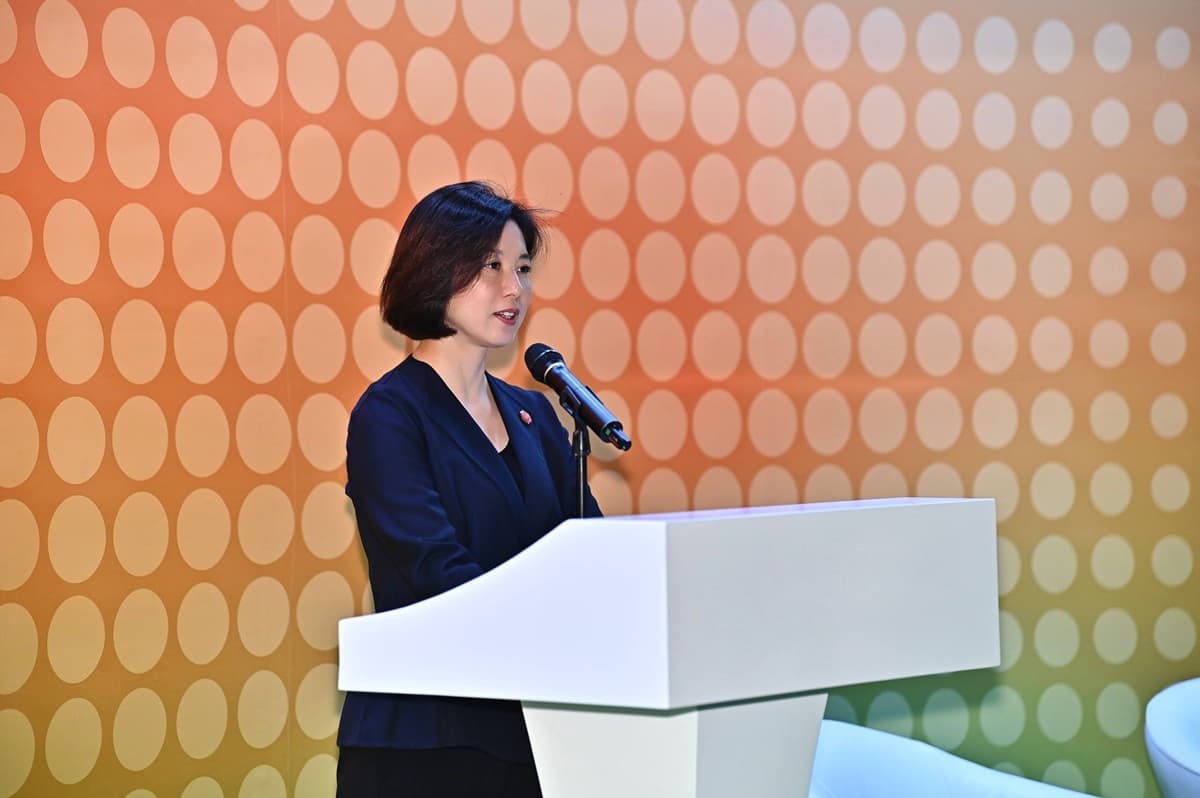
The discussion was moderated by Julianne
Tolentino, Editor of Construction Week Middle East, and opened with remarks
from Crystal Deng, Vice General Manager of China Foreign Trade, Guangzhou
Exhibition.
As development accelerates across
residential communities, hospitality projects, and mixed-use destinations,
panellists agreed that the Middle East is fast becoming a high-growth market
for furniture and design suppliers. However, tapping into that opportunity
requires a clear understanding of local demand and expectations.
Leila Sobek, Founder of BMA Studio, pointed
to strong demand across residential projects, where developers and homeowners
are increasingly prioritising quality, durability, and customisation. At the
same time, Shehzin Shaikh, Deputy Editor at CW Property, highlighted the scale
of hospitality pipelines across the region, noting that large hotel and resort
developments are driving consistent, high-volume furniture requirements.
From a procurement perspective, Ann Han,
Director of Procurement at HBA, stressed that competing on price alone is no
longer enough. Buyers in the Middle East are placing greater emphasis on
compliance, reliability, and the ability to meet strict delivery timelines.
A recurring theme throughout the discussion
was the gap between supplier assumptions and on-ground realities. Panellists
noted that many international manufacturers underestimate the operational and
logistical demands of large-scale projects in the region, particularly in
hospitality, where consistency across hundreds of rooms is critical.
Communication also emerged as a key
challenge, especially for Chinese manufacturers entering the Middle East for
the first time. Speakers pointed to language barriers and cultural differences
as factors that can impact project delivery, underscoring the need for stronger
local representation and investment in international teams.

“Transparency and clear communication are
essential when working across two very different markets,” the panel noted,
adding that building trust with regional partners is critical for long-term
success.
The session also highlighted evolving
design preferences across the Middle East, with trends such as minimalism,
quiet luxury, and a focus on quality shaping procurement decisions. Suppliers
were advised to align their offerings with these expectations while maintaining
competitive pricing.
For manufacturers looking to enter the
region, the panel emphasised the importance of establishing a physical presence
or local partnerships. Given the scale and phased nature of many Middle East
projects, long-term commitment and on-ground support are often key to securing
repeat business.