Smart Furniture × Sustainable Materials ×
Cross-disciplinary Design
In recent years, major furniture fairs
around the world have revealed a noticeable shift: furniture is increasingly
being used to respond to more complex ways of living. How well we sleep at
home, how comfortable everyday use feels, how work and rest are balanced within
the same space, and even how environmental concerns are internalised — all of
these considerations are gradually shaping design decisions.
Against this backdrop, “smart furniture,”
“sustainable materials,” and “cross-disciplinary design” have emerged as three
recurring keywords within the design discourse. This year’s CIFF Guangzhou
offers a particularly clear lens through which to observe how these threads are
taking form — and where contemporary furniture design may be heading next.
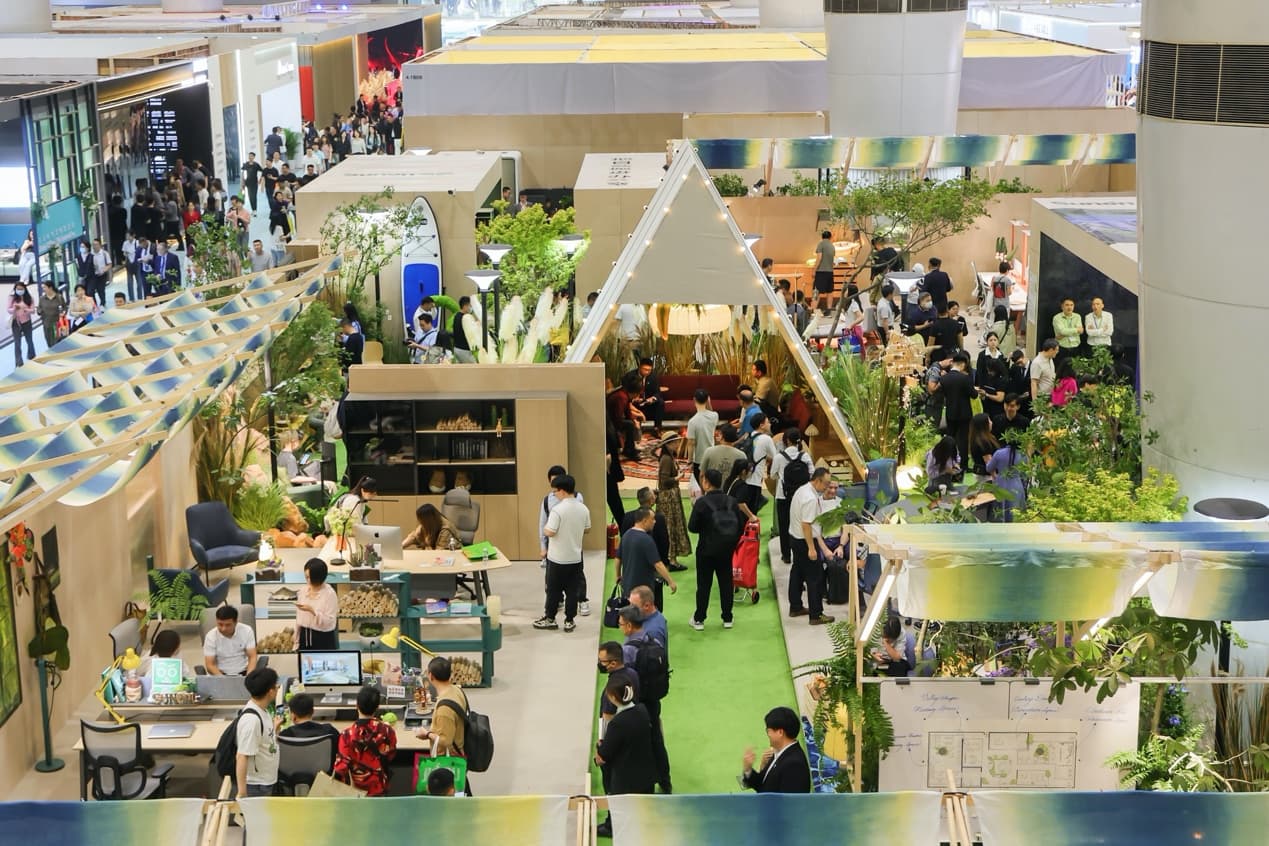
Smart furniture, from functional upgrades
to understanding daily life
The rapid rise of smart furniture is less
about technological novelty and more about its growing sensitivity to everyday
human needs. When technology moves beyond feature accumulation and begins to
interpret the body and daily rhythms, “smart” design starts to feel genuinely
relevant.
At the Smart Ecosystem Pavilion (Hall 5.2),
the focus on sleep technology highlights this shift. Brands are increasingly
attempting to bring the idea of “sleeping well” back to the centre of daily
life.
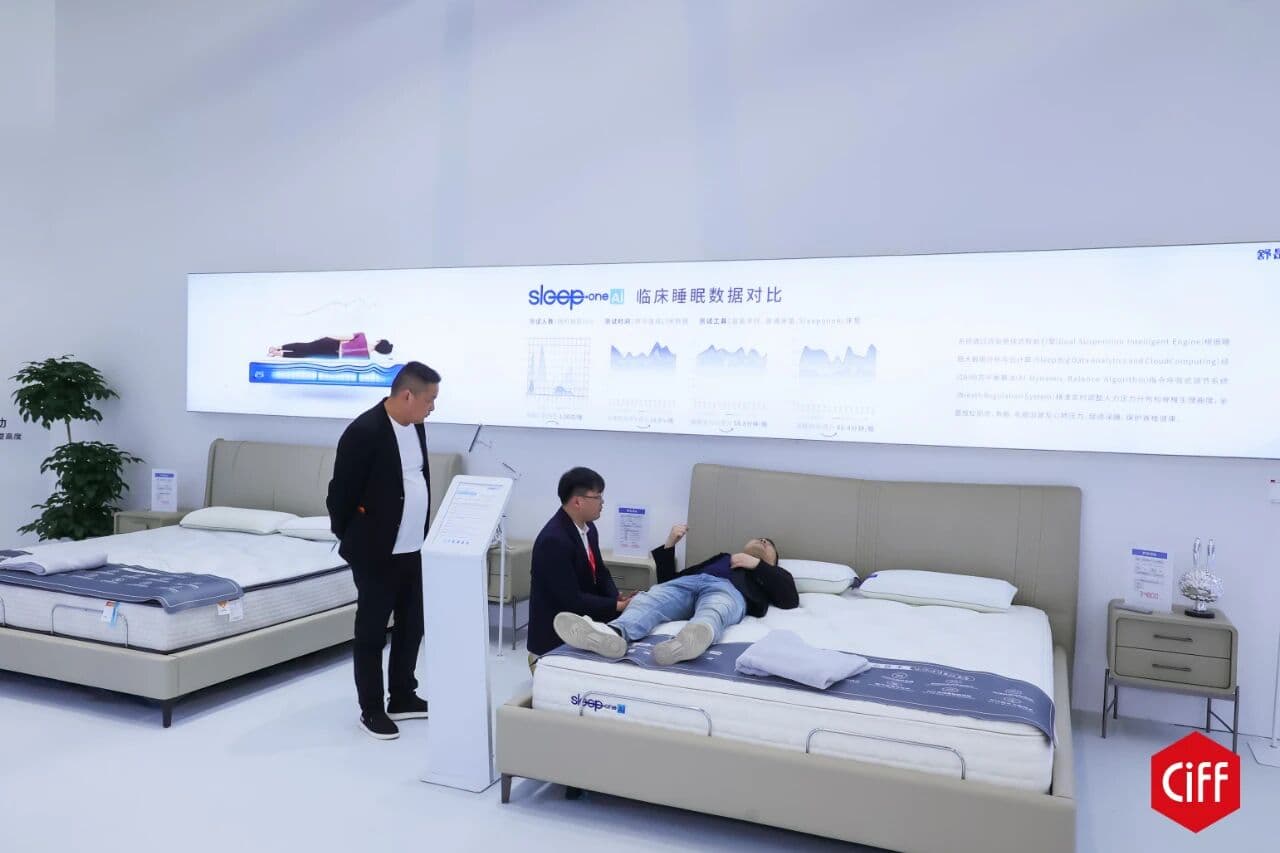
For example, DSleep, the high-end smart
sleep brand under Goodnight Group, presents its Auto3Pro AI adaptive smart bed,
which adjusts support in real time based on posture and pressure distribution.
Sleepone AI Mattress 3.0 by Shushi Intelligent combines sensing technology with
AI algorithms to deliver a quieter, more responsive and human-centred sleep
experience.
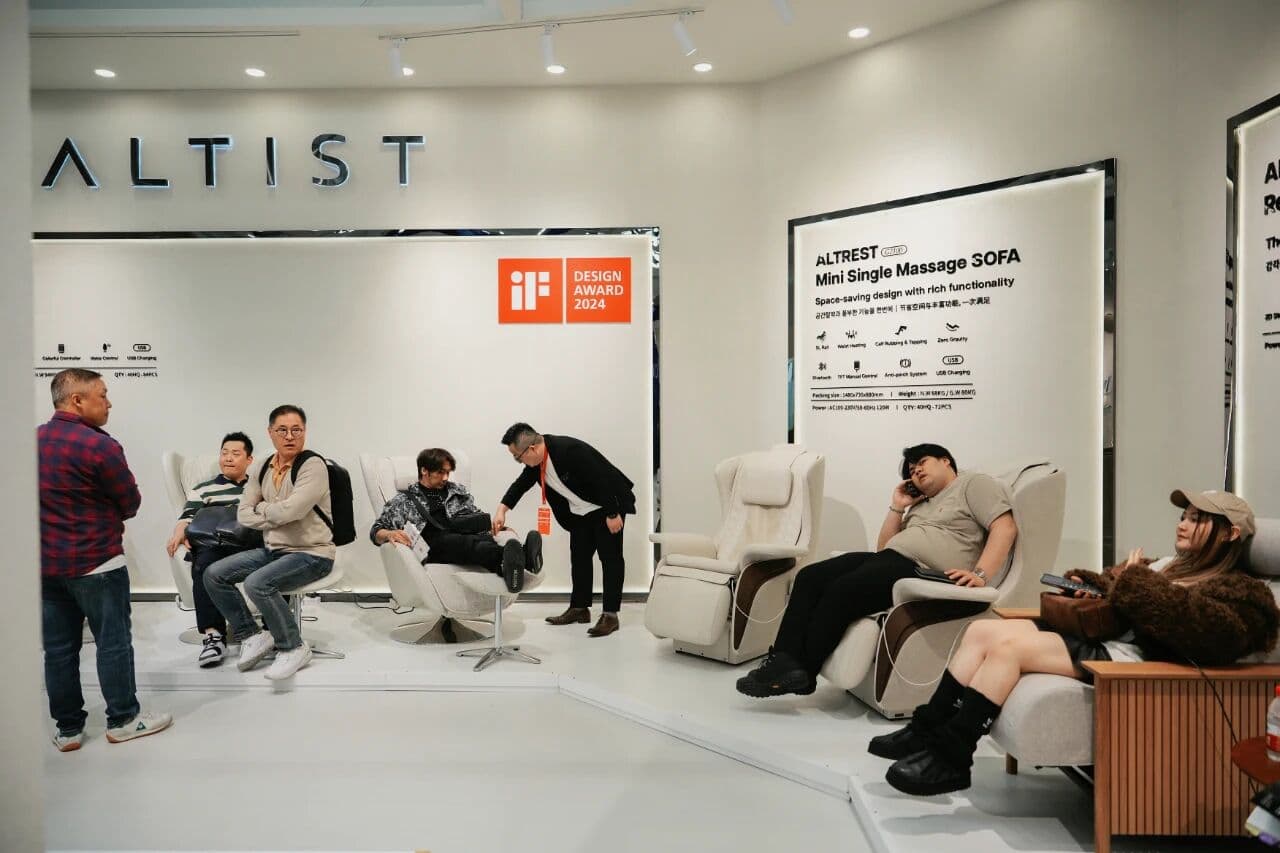
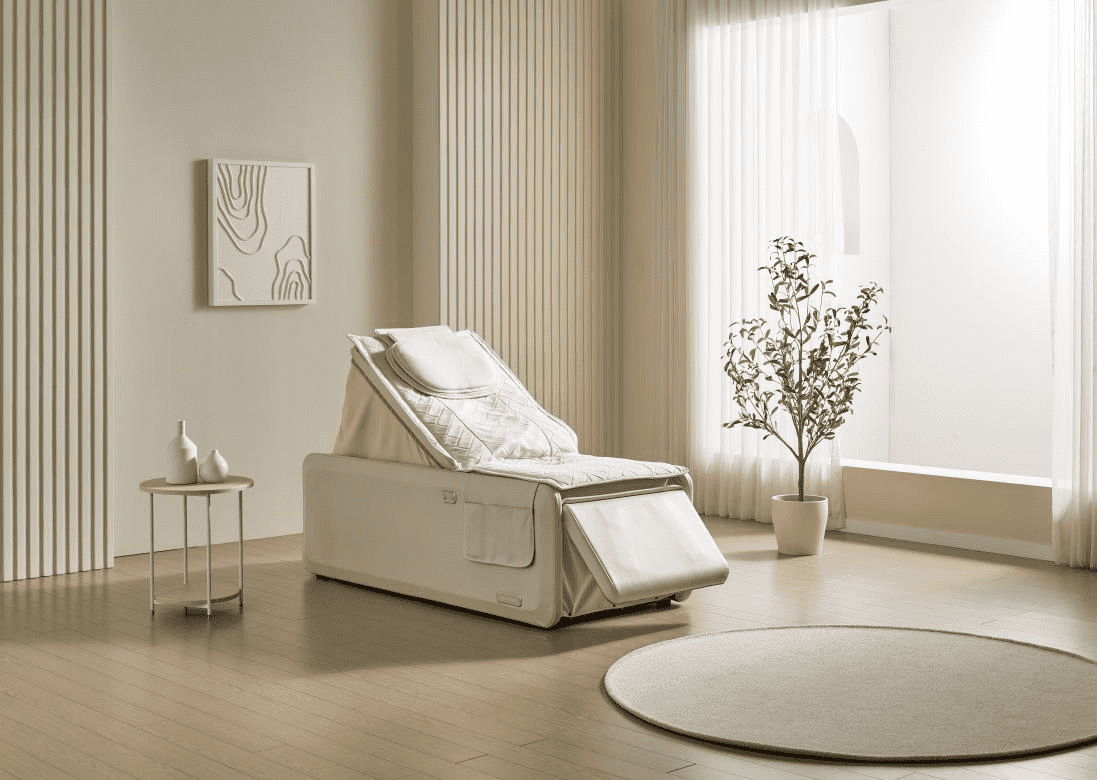
At the 55th CIFF Guangzhou, the “Sleep
Therapy – Massage Equipment Zone” further illustrated how massage devices are
merging with sleep systems. Massage chairs are no longer standalone products;
instead, they are increasingly integrated with mattresses and smart systems to
form “massage + sleep” scenarios, where relaxation becomes part of the
pre-sleep routine.
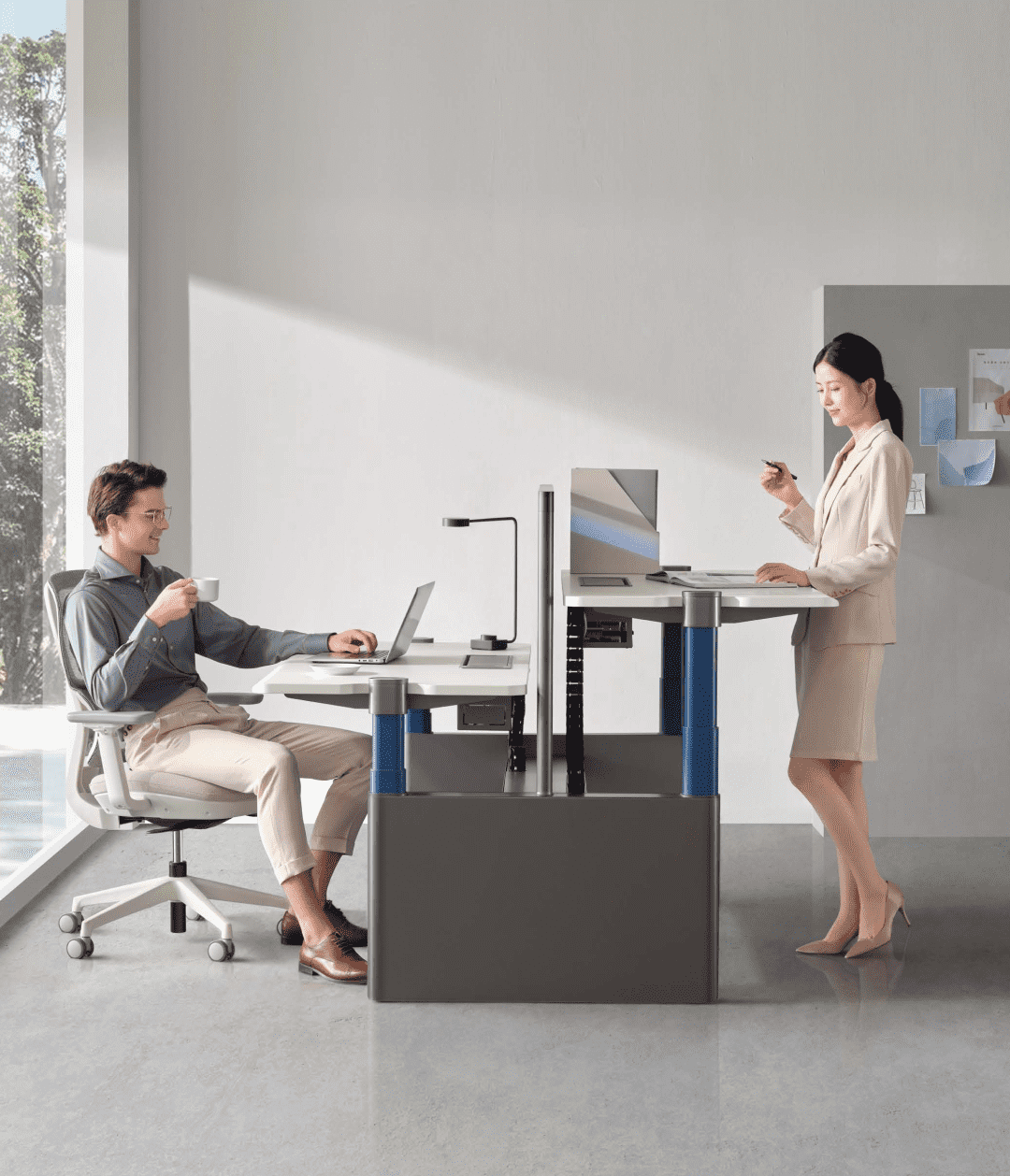
In the workplace, smart furniture has similarly
evolved beyond the simple mechanics of sit-stand desks. The emphasis now lies
in how desks, electrical systems, sensors and cable management are integrated
into a seamless user experience.
The UP 7 sit-stand desk by Sunon, for instance, incorporates radar-based human
sensing within the desk structure to detect sitting and standing behaviour in
real time, offering reminders based on actual sedentary patterns — allowing
office furniture to respond directly to the physical realities of long working
hours.
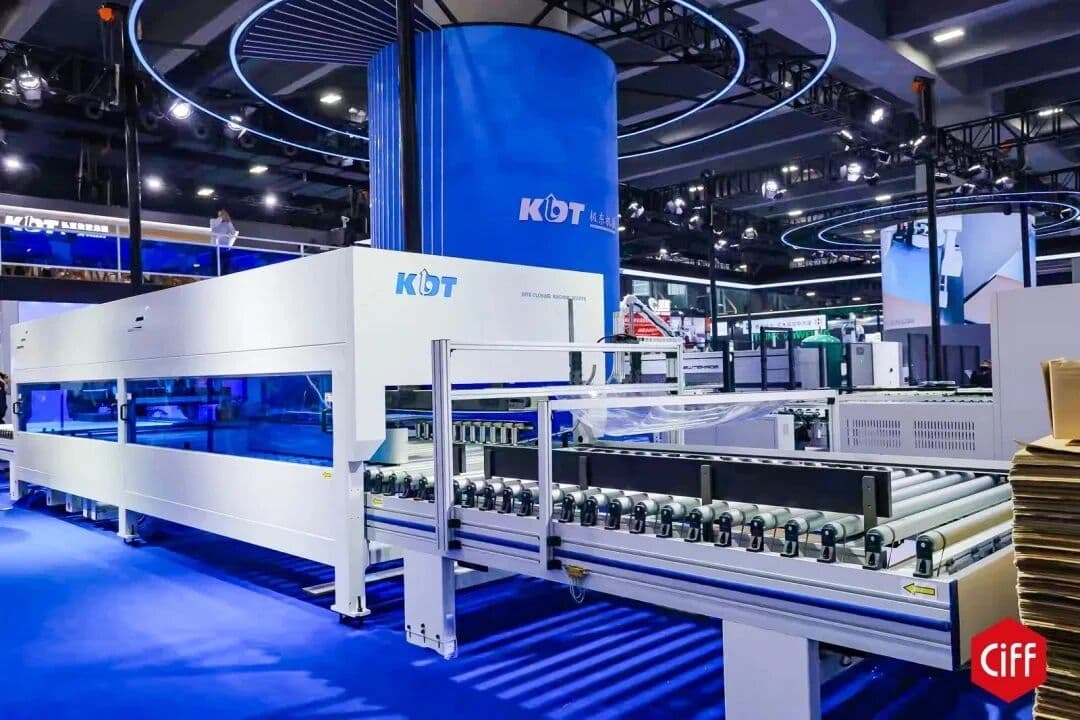
Behind these user-facing innovations,
manufacturing upgrades remain essential. In the Production Equipment Zone at
Area B of the Canton Fair Complex, CIFF presents a full-process intelligent
manufacturing ecosystem built around Industry 4.0 and flexible production. From
CNC panel saws and smart machining centres to automated flexible production
lines and intelligent packaging systems showcased by KDT Machinery, precision
and adaptability form the backbone of furniture’s intelligent evolution.
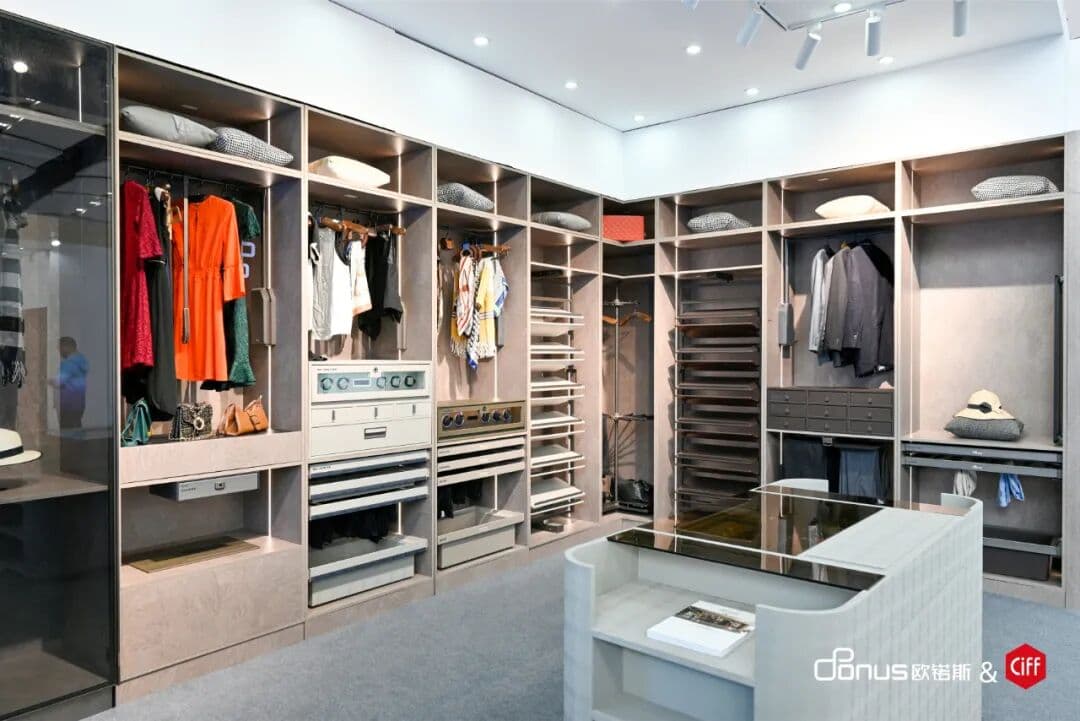
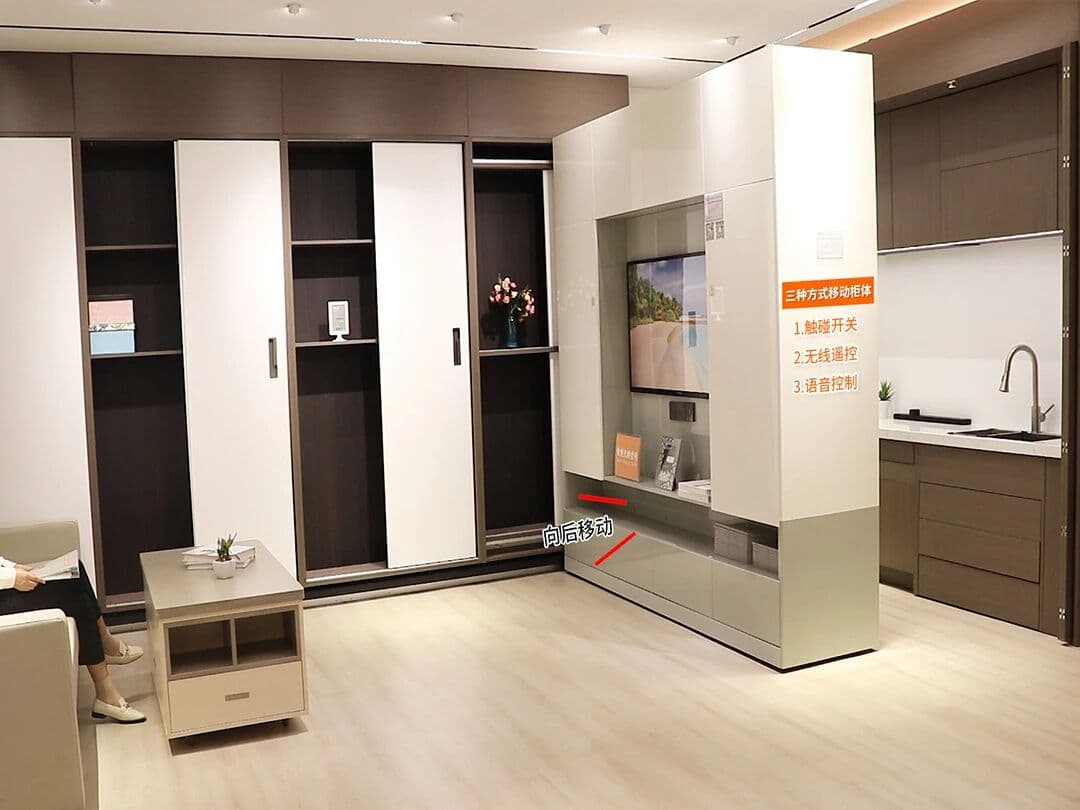
Even hardware components are undergoing a
transformation. In the Hardware & Accessories Zone, functional hardware is
shifting from mechanical quality to intelligent responsiveness. ONUS’s smart
lifting systems adapt storage and retrieval to different user heights and
scenarios; Meiliwang’s intelligent mobile base systems allow cabinets to move
freely across living spaces via buttons, remote controls, apps or voice
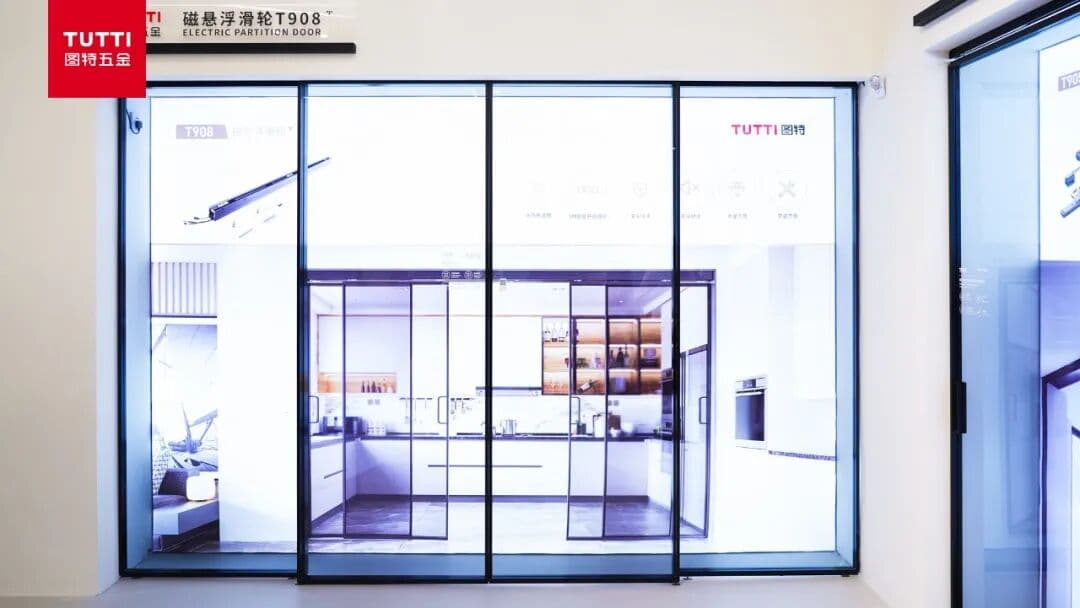
commands; and TUTTI Hardware’s magnetic levitation sliding system T908
integrates intelligent door control and motion learning, combining safety with
near-silent operation.
Sustainable materials as a non-negotiable
premise
Across the furniture industry, a shared
understanding is gradually taking shape: design no longer answers only whether
something looks good, but also where materials come from, how they are
produced, and where they go at the end of their life cycle. Once sustainability
is embedded into the design process, green materials become less of a choice
and more of a prerequisite.
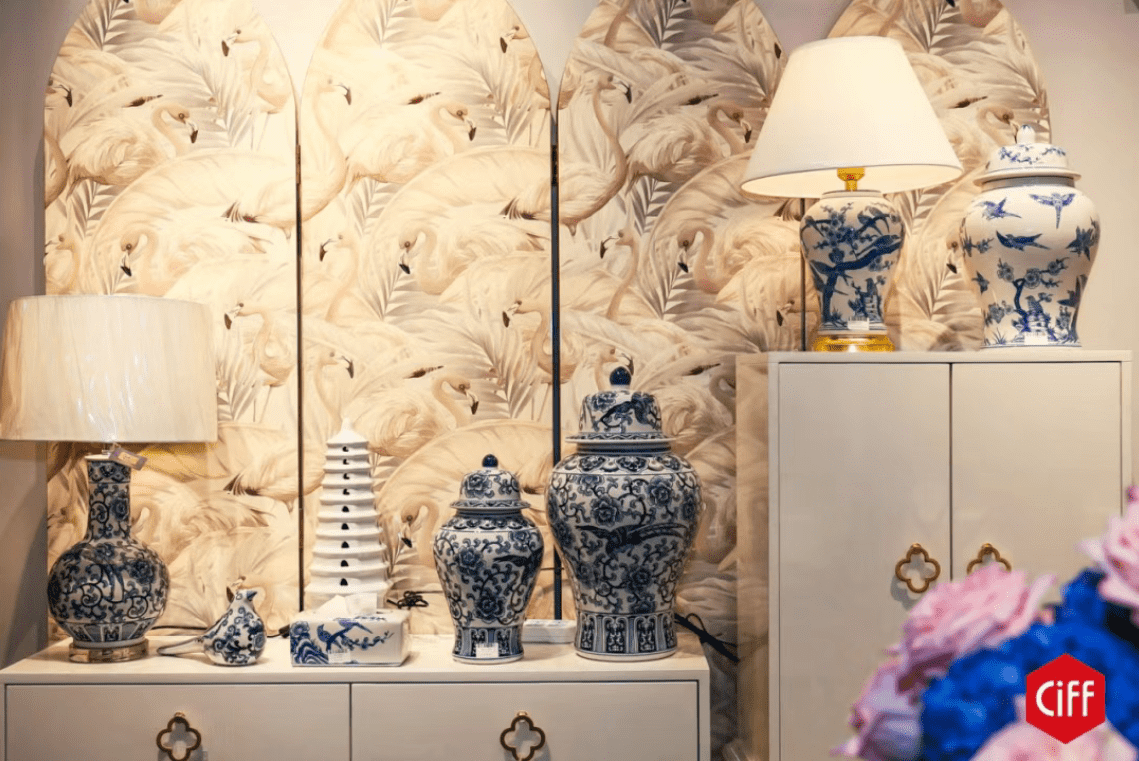
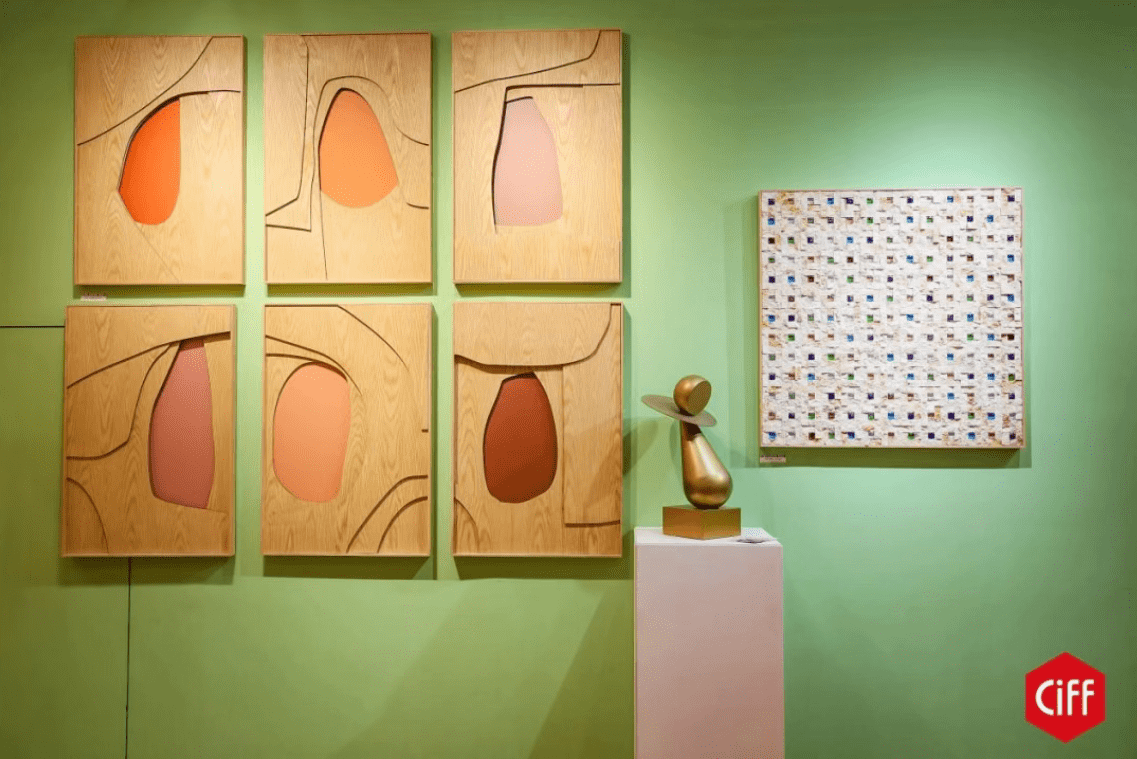
At CIFF Guangzhou, the Decor & Textile
Exhibition themed “Breakthrough” serves as an entry point for observing this
transition. Some brands approach sustainability through cultural narratives and
everyday aesthetics, while others focus on material innovation, reinterpreting
traditional crafts such as ceramics, glass and textiles through contemporary,
sustainable lenses.
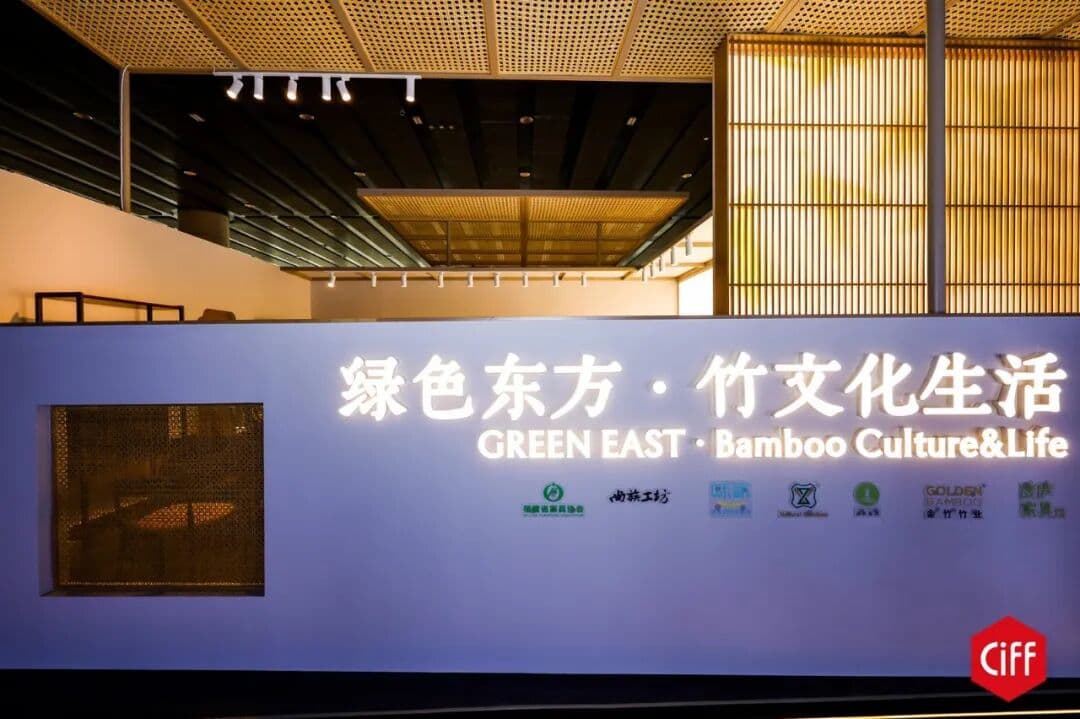
Last year’s “Green East · Bamboo Culture
& Life Exhibition” offered a concrete response to this mindset. Eighteen
companies across the bamboo industry chain explored the concept of “bamboo as
an alternative to plastic,” presenting complete bamboo-based home scenarios.
Bamboo was positioned not only as an eco-friendly material, but also as a
natural, understated resource capable of being fully absorbed into contemporary
design language.
The CMF Trends LAB pushes this conversation
further upstream, towards material origins. Bio-based materials and
biodegradable technologies are appearing more frequently in design vocabularies,
as brands and designers attempt to reduce carbon footprints from the earliest
design stages.
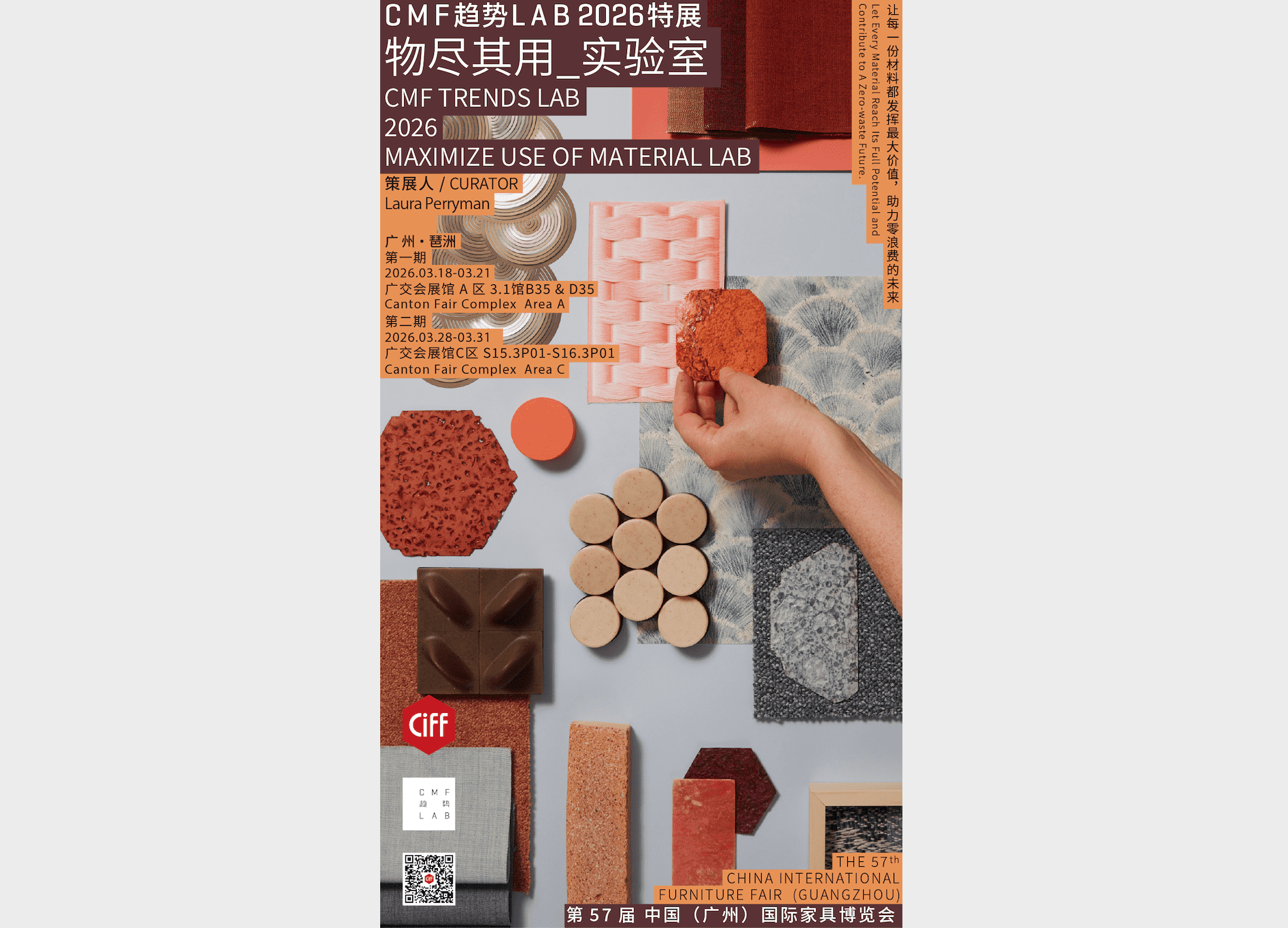
Among this year’s CMF Trends LAB themes,
“Maximize Use of Material Lab” stands out as a timely response to sustainable
design challenges. Curated by colour and material designer and trend forecaster
Laura Perryman, the exhibition explores the reuse of waste materials and
offcuts, transforming them into functional new materials or products —
extending material life cycles while creating new contexts for use.
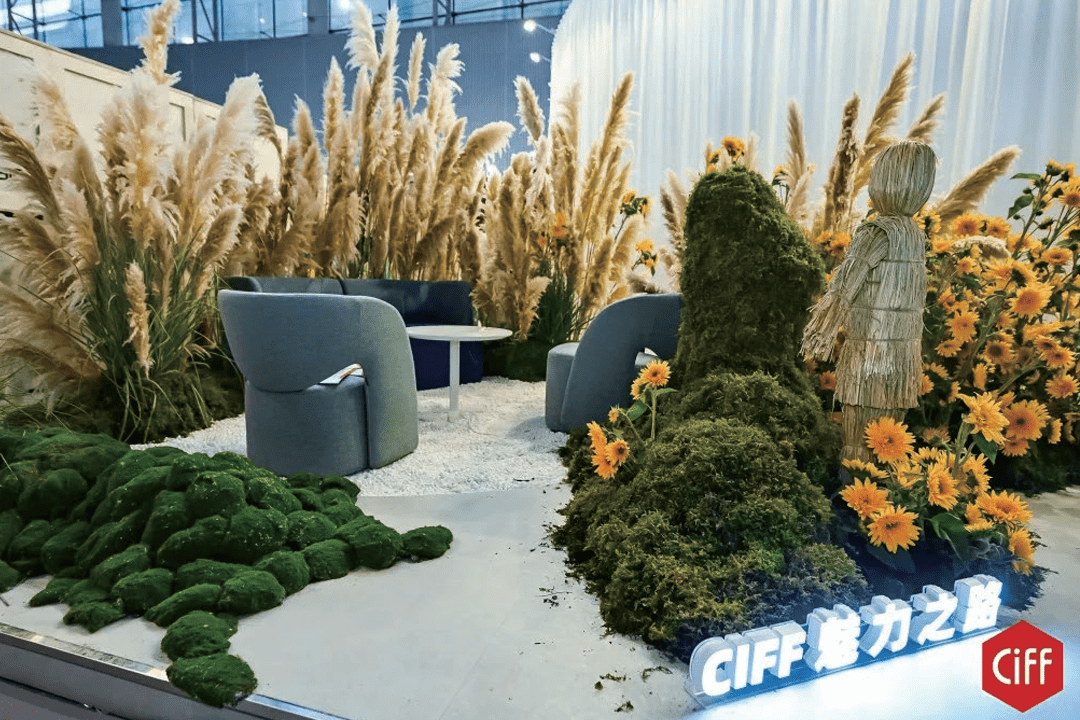
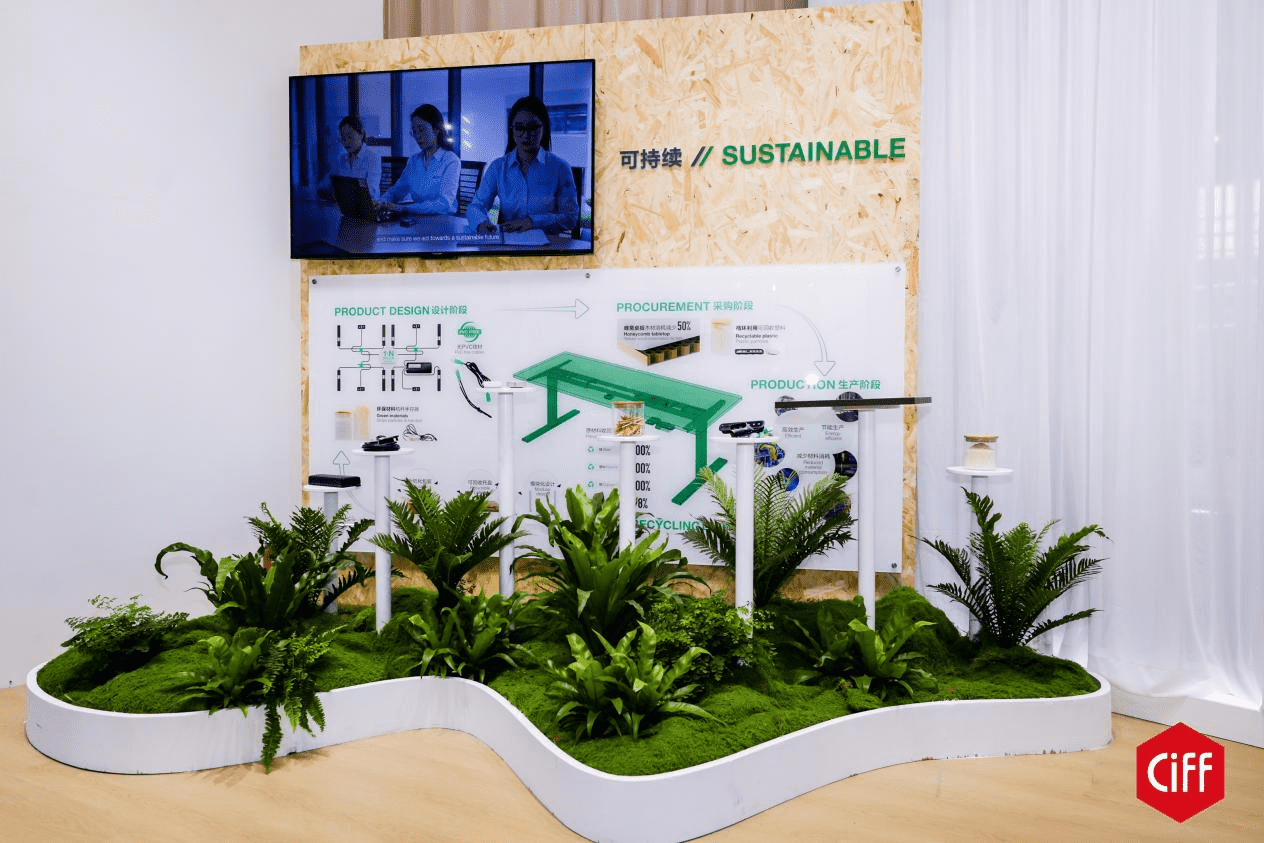
As sustainability becomes a global
consensus, furniture is increasingly expected to address environmental
responsibility alongside efficiency and aesthetics. From last year’s CIFF Charm
Road to the upcoming 2.0 edition, low-carbon office environments form a
recurring narrative within the commercial exhibition. Meanwhile, the Office
Environment Theme Pavilion, guided by the concept “Structure · Boundaryless ·
Sustainable,” integrates sustainable materials into future workplace
imaginaries, embedding green thinking naturally into spatial design.
Cross-disciplinary design and the redefinition of the designer’s role
Fields once considered distant from furniture — automotive, home appliances, technology, fashion, and even anime IP — are becoming important collaborators for designers. For practitioners, this expansion opens access to new usage scenarios and markets previously beyond reach.
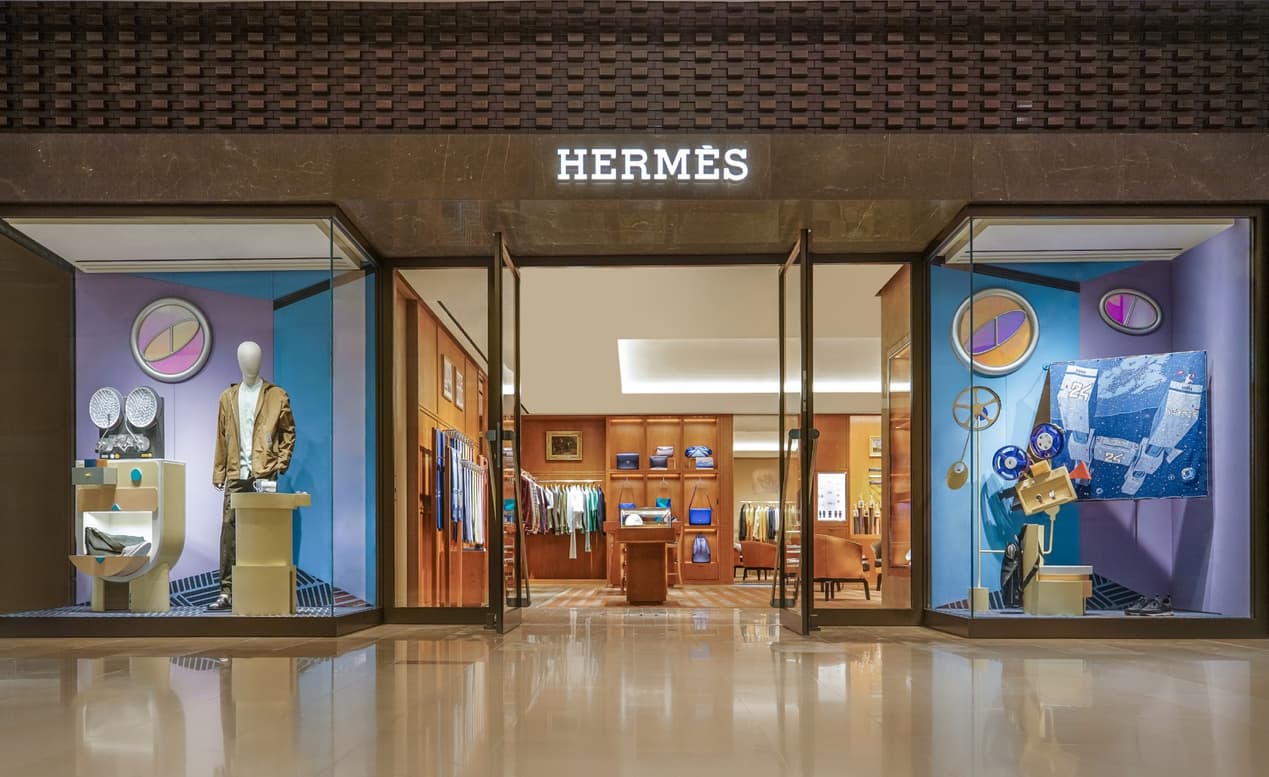
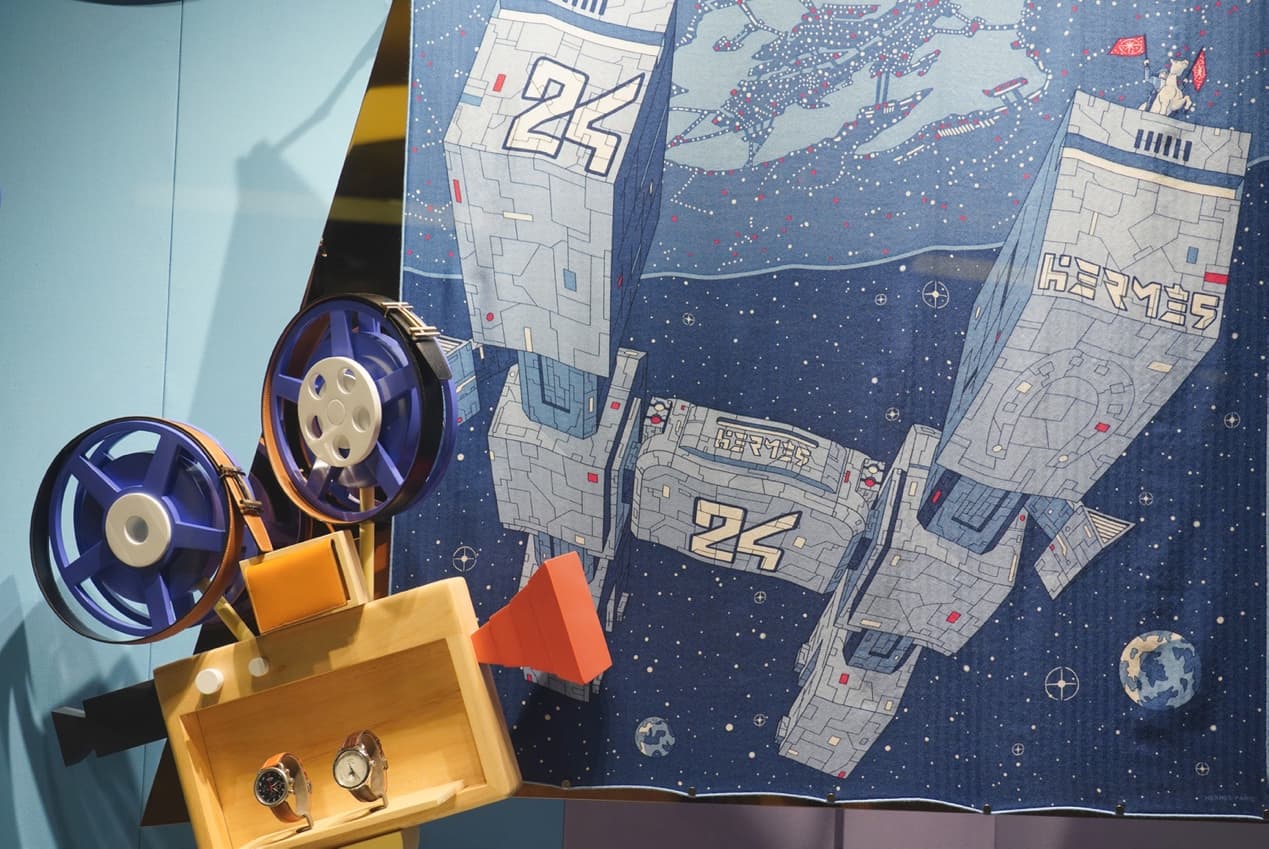
A long-term collaboration between Benwu Studio and Hermès illustrates this shift. Since 2014, the partnership has spanned window displays, exhibition design and special product development, allowing an independent studio to integrate narrative, art and commerce into a cohesive expression, while offering the brand fresh perspectives within its established system.
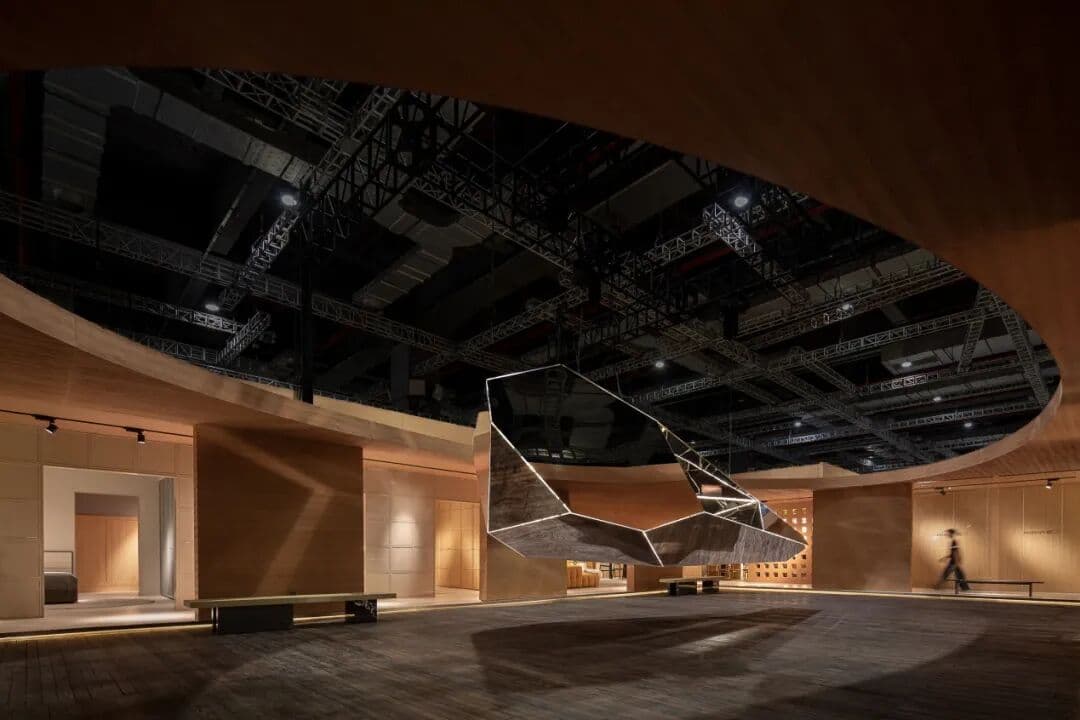
Another notable example is architect Ma
Yansong’s installation “Emotional Spaceship” for HC28 Maison. Suspended above
the booth’s central atrium, the mirrored structure functions not merely as a
visual statement but as an architectural intervention into the relationship
between furniture, space and people. Reflecting bodies, objects and
surroundings in motion, the installation blurs the boundary between reality and
imagination, transforming the booth into an immersive environment rather than a
conventional product display.
Through such cross-disciplinary
collaborations, architecture, art and furniture design increasingly overlap —
enabling brands to be experienced, understood and remembered in ways that
extend beyond the object itself.